

Nariño department of Colombia, January 2026
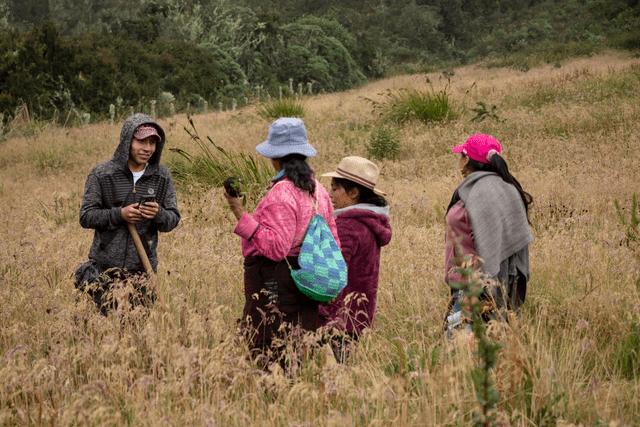
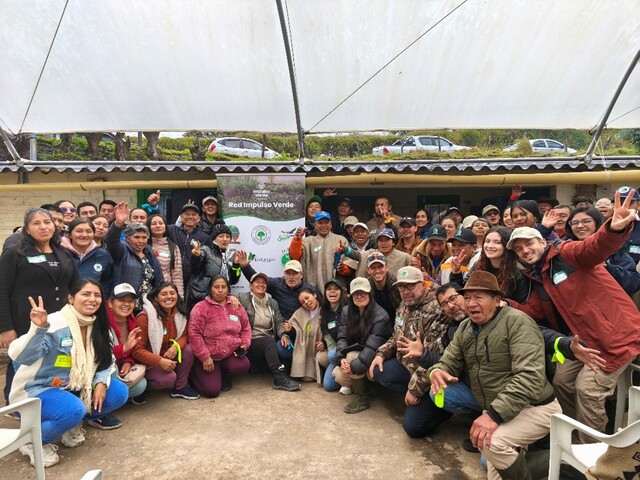
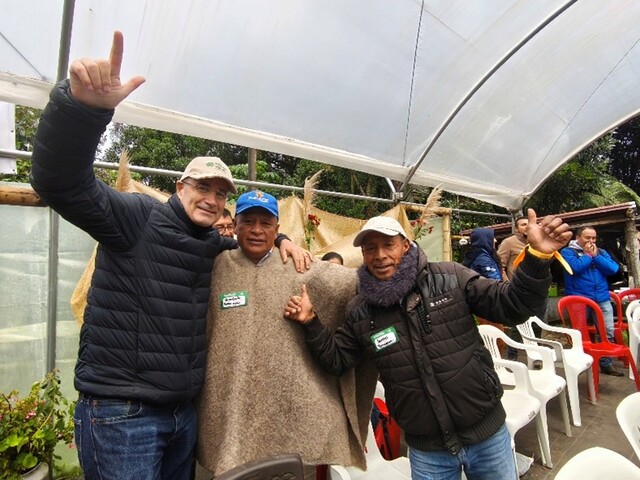
As is often the case in the mountains of Nariño, participants arrived wrapped in ponchos and boots, braving persistent rain and the cold Andean climate. Women, young people, and men, beneficiaries of the project, from different parts of the region came together to meet, came to learn from each other, and share their knowledge and experiences.
The gathering opened with a traditional zapateo dance from Nariño, performed to invoke the god of the sun and set the mood for two days of dialogue, learning, and exchange. Standing in a circle, the groups each introduced themselves and affirmed their shared belief that community unity is essential to restoring ecosystems and protecting the territories they depend on.
The event brought together 16 tree nurseries and Indigenous associations, alongside environmental authorities and civil society organisations, as well as public and private institutions from across the department. Organised by A Tree for You’s local partner, the Franco-Colombian foundation Impulso Verde Kuaspue, the exchange was hosted by the association Ecoturagro Association, an active member of the Impulso Verde nursery network since 2022.
“We are delighted to be hosting this gathering,” said Camila from Ecoturagro. “We are proud to see how this collective approach to environmental stewardship is continuing to grow, helping us reach our goals and setting an example for communities. As an association led by six women, we want to show that by working together, we can act for the common good and replicate this model elsewhere.”
Over the course of two days, more than 50 participants exchanged their knowledge and experiences on key topics such as participatory environmental mapping, silvopastoral systems, community-based beekeeping, and ecological restoration as viable economic alternatives to deforestation in Andean forests and páramo ecosystems. These discussions were interwoven with moments of deep connection to the land, which included exchanging seeds and screening of ‘Roots of Change’, – a documentary highlighting how farming and Indigenous communities in Nariño are advancing green initiatives that combine ecosystem restoration with dignified livelihoods.
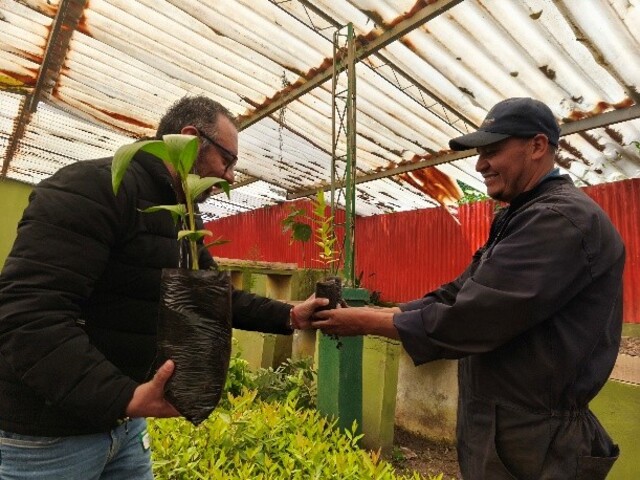
“I have learned so much through this community-based process with the nurseries,” said Pedro from the Progresar Agricultural Producers association. “The beekeeping and silvopastoral programmes implemented by Impulso Verde show how economic development and reforestation can go hand in hand, they are inseparable.”
The event also welcomed key regional partners, including the University of Nariño, the Regional Autonomous Corporation of Nariño (Corponariño), the Colombian Agricultural Institute (ICA), National Natural Parks of Colombia, the Suyusama Foundation, the Social Pastoral of Ipiales, and the Nariño Youth Environmental Network, among other important territorial stakeholders.
“We strongly believe that working hand in hand with communities is fundamental to regional development,” pointed out Carlos, a representative of Colombia’s National Natural Parks. “From ecological restoration to ecotourism and research, we are pleased to support such initiatives that strengthen local territories.”
Thanks to coordinated efforts between farming and Indigenous communities, more than 1.5 million trees, representing 130 native species, have been planted since 2016. This has involved with over 200 people working in the nurseries one to two days a week, 70% of them women.
Since 2023, A Tree for You and its donors have supported the entire reforestation programme by reinforcing the community nurseries, tree planting, developing green value chains (including beekeeping and transforming medicinal plants into natural cosmetics), and environmental education.
Beyond its environmental impact, the network promotes sustainable economic alternatives that strengthen local ties and reduce pressure on ecosystems. These include community-based beekeeping, processing aromatic and medicinal plants into natural cosmetic products, adding cereals and other crops grown in shagras (agroecological home gardens) to household food baskets, and contributing to food security and community well-being.