

Background & challenges
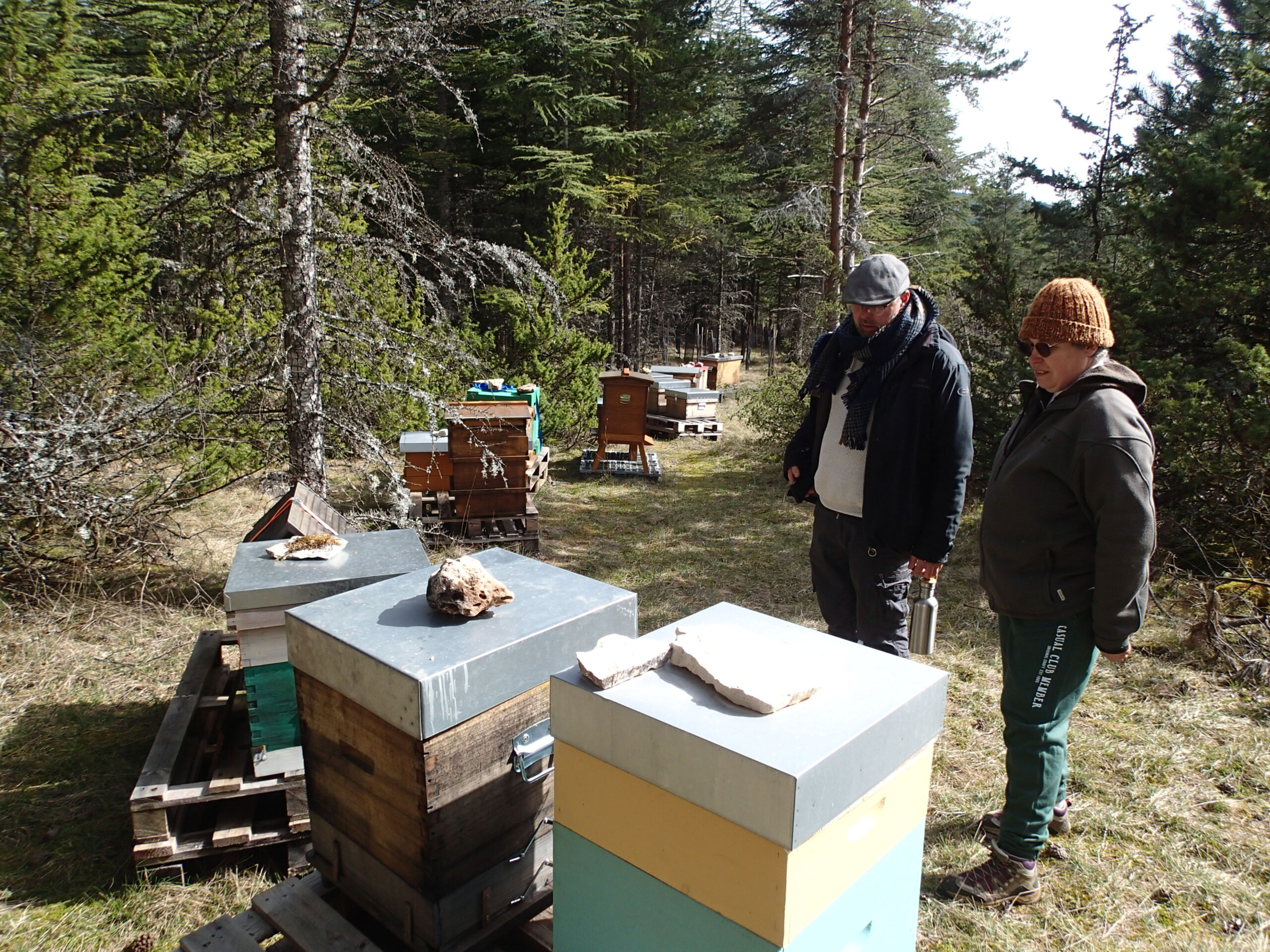
The main goal of this project is to protect the Cévennes black bee. This local bee, Apis mellifera mellifera by its scientific name, has lived in north-western Europe for over a million years. It is the only honey bee to have survived the last ice age (which ended 10,000 years ago). With its extraordinary ability to resist and adapt to different climates and local plants, this species is now threatened with extinction. Like all pollinators, the black bee is a victim of several factors: degradation of its natural habitat, pesticides, parasites and viruses, invasive species, etc. It is also a victim of the massive importation of other non-local bee subspecies.
Protecting this endemic bee is vital for truly sustainable beekeeping that can benefit future generations. To prevent it from dying out,, a Black Bee Conservatory was set up in the Cévennes in 2008. The valley now has 150 colonies.
The melliferous forest educational project is based on two lines of action:
- Installing melliferous species that appeal to wild pollinators, thereby enriching local biodiversity.
- Restoring the link between humans and nature through free or guided tours for schools, families, groups of all ages, etc.
Planting 5,468 trees of endogenous and exogenous species will deliver the following benefits:
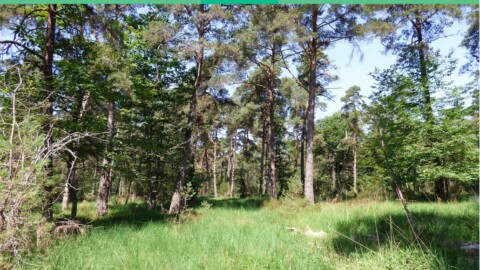
- replace the Austrian black pines on the plot with melliferous species, thus creating a sanctuary for black bees and other pollinators where they will find food all year round;
- enrich biodiversity, both fauna and flora;
- revive the evapotranspiration cycle and so regenerate the water cycle;
- create a micro-climate to protect the ecosystem from the heat of summer and cold of winter.
- reconnecting people with nature by creating an educational area in the forest to learn about the black bee and the melliferous species planted.
A biodiversity survey will be carried out as part of the project to assess its effects on pollinators over time. Monitoring will record the species present and their abundance, as well as the flowering plants visited by insects. The melliferous flora will also be studied to identify links between plant diversity and the presence of pollinators. Conducted regularly throughout the project, this survey will make it possible to measure changes in biodiversity and the impact of the planting.
Project type

Forestry
Beneficiaries

Local residents and beekeepers
Number of trees
5,468 trees planted by the end of the project
Species planted

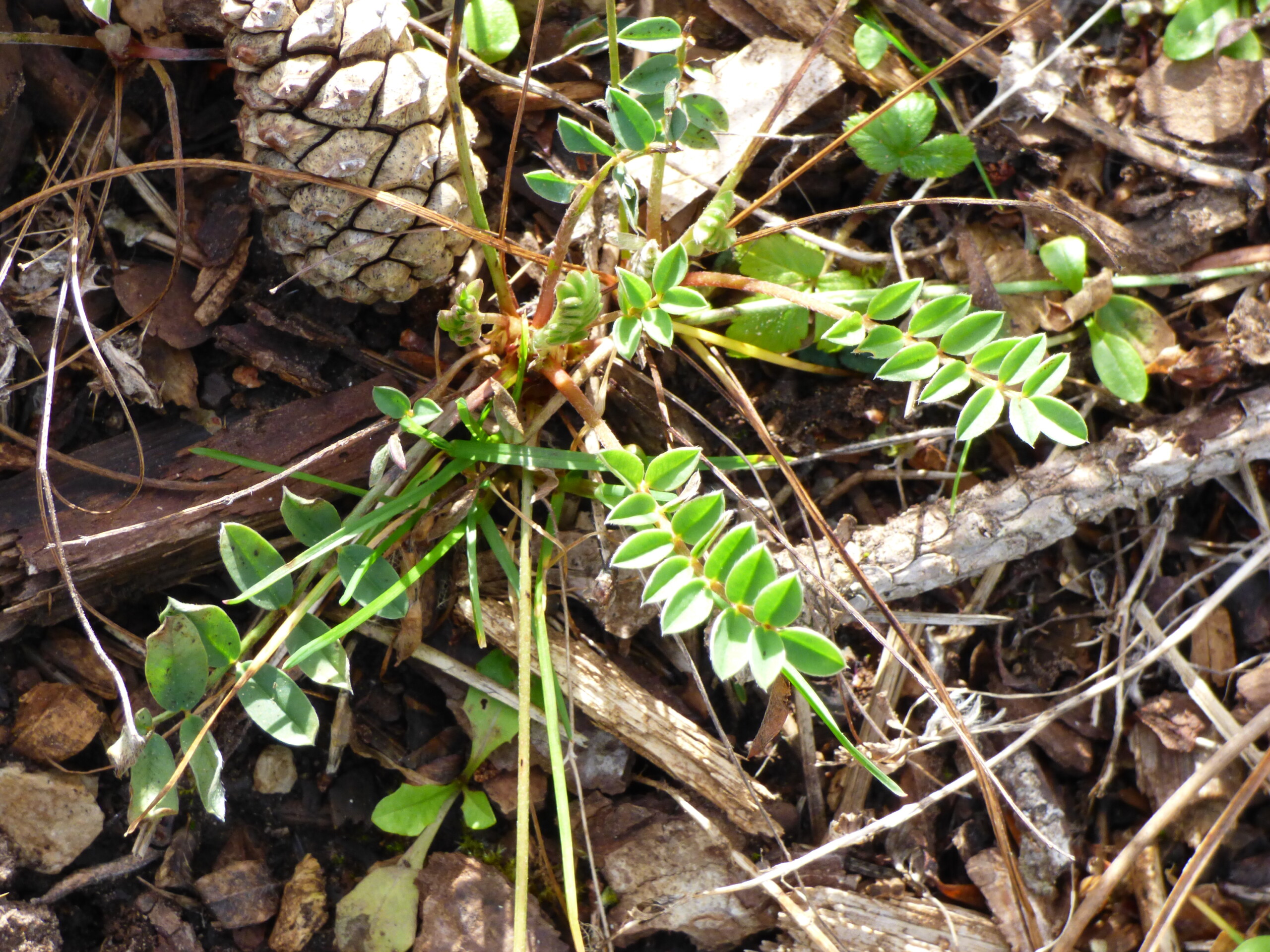
More then 20 different species
Partner

Marinapis la forêt mellifère & POLLBIODIV’
1) Exogenous species in groves
Abelia chinensis (Chinese abelia)
Aesculus hippocastanum (horse chestnut)
Amelanchier canadensis (Canada serviceberry)
Amelanchier lamarckii (Lamarck’s service tree)
Aralia elata (Japanese angelica tree)
Buddleja officinalis (officinal butterfly tree)
Buddleja (x) weyeriana Sungold (Weyer Sungold butterfly tree)
Caragana arborescens (Siberian caragana)
Caryopteris x Clandonensis (Grand Bleu)
Céanothus pallidus Marie Simon (‘Marie Simon’ ceanothus)
Céanothus delilianus Gloire de Versailles (California Lilac ceanothus)
Chaenomeles japonica (Japanese quince)
Choisya (Mexican orange)
Clerodendrum trichotomum (clerodendron)
Corylus colurna (Byzantine hazel)
Cotoneaster franchetii (Franchet’s cotoneaster)
Cotoneaster lacteus (milky cotoneaster)
Elaeagnus ebbingei (Ebbing’s oleander)
Eriobotrya japonica (Japanese medlar)
Heptacodium miconioides (Chinese heptacodium)
Hovenia dulcis
Kalopanax septemlobus (seven-lobed kalopanax)
Koelreuteria paniculata (soap plant)
Ligustrum japonicum (Japanese privet)
Ligustrum sinense (Chinese privet)
Lonicera fragrantissima (winter honeysuckle)
Mahonia aquifolium (holly-leaved mahonia)
Philadelphus (garden syringe)
Photinia fraseri (photinia)
Sophora japonica (Japanese sophora)
Tetradium danielli (honey tree)
Tilia henriana (Henry’s lime)
Viburnum lantana (viburnum viburnum)
2) European/endogenous species
Acer opalus (wild maple)
Amelanchier ovalis (common serviceberry)
Arbutus unedo (strawberry tree)
Buxus sempervirens (boxwood)
Celtis australis (Provence hackberry)
Cercis siliquastrum (Judas tree)
Cistus monspeliensis (Montpellier rockrose)
Colutea arborescens (baguenaudier)
Cornus mas (male dogwood)
Cornus sanguinea (blood dogwood)
Cupressus sempervirens var.pyramidalis (Italian cypress)
Elaeagnus angustifolia (Bohemian olive)
Fraxinus ornus (flowering ash)
Hedera helixerecta (shrub ivy)
Hypericum (St John’s wort)
Lavandula intermedia (lavandin)
Ligustrum vulgare (common privet)
Lonicera periclymenum (wood honeysuckle)
Lonicera xylosteum (camellia)
Malus sylvestris (wild apple)
Mespilus germanica (medlar)
Prunus avium (wild cherry)
Prunus dulcis (almond)
Prunus padus (chokecherry)
Prunus mahaleb (Saint Lucia cherry)
Pyrus communis (wild pear)
Buxus sempervirens (boxwood)
Celtis australis (Provence hackberry)
Cercis siliquastrum (Judas tree)
Cistus monspeliensis (Montpellier rockrose)
Colutea arborescens (baguenaudier)
Cornus mas (male dogwood)
Cornus sanguinea (blood dogwood)
Cupressus sempervirens var.pyramidalis (Italian cypress)
Elaeagnus angustifolia (Bohemian olive)
Fraxinus ornus (flowering ash)
Hedera helix erecta (tree ivy)
Hypericum (St John’s wort)
Lavandula intermedia (lavandin)
Ligustrum vulgare (common privet)
Lonicera periclymenum (wood honeysuckle)
Lonicera xylosteum (camellia)
Malus sylvestris (wild apple)
Mespilus germanica (medlar)
Prunus avium (wild cherry)
Prunus dulcis (almond)
Prunus padus (chokecherry)
Prunus mahaleb (Saint Lucia cherry)
Pyrus communis (wild pear)
Rhamnus cathartica (buckthorn)
Rhamnus frangula (borage)
Ribes alpinum (gooseberry)
Rosmarinus officinalis (rosemary)
Rubus idaeus (raspberry)
Sambucus nigra (Black Elder)
Spartium junceum (Spanish broom)
Sorbus aria (white elm)
Sorbus aucuparia (bird’s sorb)
Sorbus domestica(corm tree)
Sorbus torminalis (black ash)
Taxus baccata (common yew)
Tilia cordata (wood lime)
Tilia platyphyllos (basswood)
Viburnum lantana (viburnum viburnum)
Viburnum tinus (tin laurel)
Vitex agnus-castus (chaste tree)
Ziziphus jujuba (Provence jujube)
3) Hedge along fencing
Berberis (barberry)
Crataegus (hawthorn)
Paliurus spina christi (thorn of Christ)
Prunus spinosa (blackthorn)
4) Wetlands
Alnus glutinosa (black alder)
Betula pendula (warty birch)
Populus nigra (black poplar)
Salix caprea (willow)
Works timeline
- March to October 2027, 2028 and 2029: planting preparation
- November to March 2026/2027: first planting season
- November to March 2027/2028: second planting season
- November to March 2028/2029: third planting season
2027, 2029 and 2031: biodiversity survey
2027 to 2032: maintenance and monitoring of the plantings
Planting partner
MARINAPIS – La forêt mellifère
The MARINAPIS association has been a partner of A Tree for You since 2024, and together they carried out an initial planting project in this forest. MARINAPIS manages the project locally, orders equipment, coordinates the monitoring of activities and reports on them to A Tree for You through financial and technical reports.
POLL’BIODIV
PollBiodiv’ is a sole-trader business set up in 2025 that studies and protects wild and domesticated pollinators and melliferous flora, and raises awareness about them.
Budget
The total budget to be raised is €123,033.36, i.e. €22.50 per tree planted and established, broken down as follows:
- 90% allocated to the planting project, broken down as follows:
- Botanical assessment and planting by POLL’BIODIV: €2.82
- Pollinator survey by POLL’BIODIV: €5.51
- Seedlings and equipment: €7.17
- Educational signboard: €1.13
- Risks and contingencies: €0.40
- Monitoring and coordination by MARINAPIS: €0.97
- A Tree for You fundraising, monitoring and communication costs (10%): €2.25
- and 10% (€2.25) allocated to A Tree for You’s overheads.