
Background & challenges
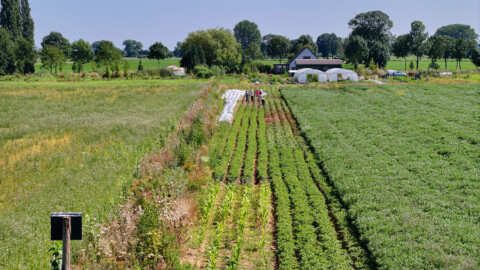
The project will run in agricultural areas of southern France, which are particularly exposed to the effects of climate change: prolonged droughts, strong winds, heavy rainfall, and growing risks of soil erosion. These conditions weaken agricultural holdings—mainly vineyards, vegetable farms, orchards, and extensive livestock farms – as well as jeopardising soil fertility and sustainable production.
Since 2011, Agroof, A Tree for You’s partner, has supported a growing number of Mediterranean farmers in designing and implementing agroforestry projects, which include hedgerows, tree lines, groves, and orchards, depending on the specific needs of each farm.
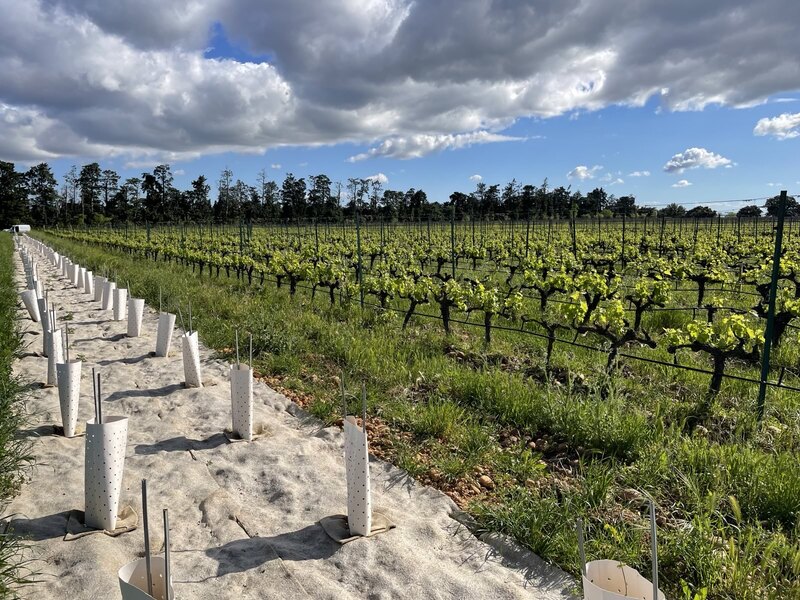
The aim is to restore the resilience of agricultural systems by combining production with ecological functions: protecting against wind and erosion, improving microclimates and biodiversity, enhancing water infiltration, and enriching soils.
By supporting these plantations, the project seeks to strengthen the sustainability of farms, diversify their production, and preserve Mediterranean landscapes in the face of increasing climate-related pressures.
The hedgerow planting on these farms aims to:
- Improve soil fertility and structure, enhance water retention and reduce erosion.
- Strengthen the water cycle by improving infiltration and reducing runoff.
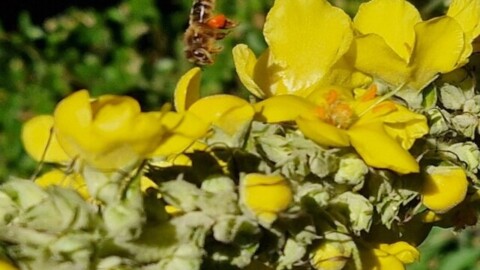
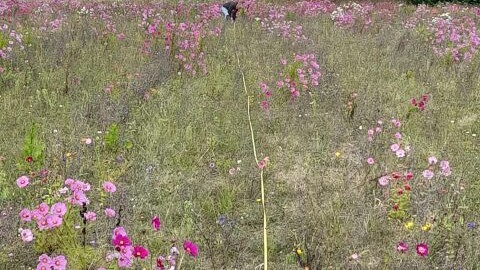
- Develop biodiversity by creating habitats for local fauna and flora.
- Regulate the microclimate, with positive impacts on crops and for animal welfare (shade, less wind, humidity).
- Capture carbon, contribute to climate change mitigation.
- Diversify agricultural income through tree products (timber, fruit, biomass, etc).
- Reduce reliance on chemical inputs thanks to natural soil fertility and beneficial organisms.
- Provide a demonstration model that can be replicated, thus encouraging other Mediterranean regions to adopt more sustainable practices.
The project supports a wide variety of agricultural systems representative of the Mediterranean basin. In particular, it supports wine-growing farms engaged in organic farming or in conversion, integrating hedges and tree lines to protect vines from the wind and improve functional biodiversity.
It also involves diversified market gardens and orchards, where hedges promote water regulation, crop protection and pollination.
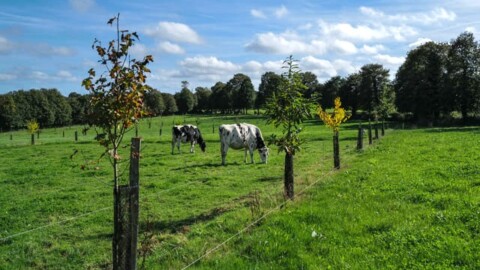
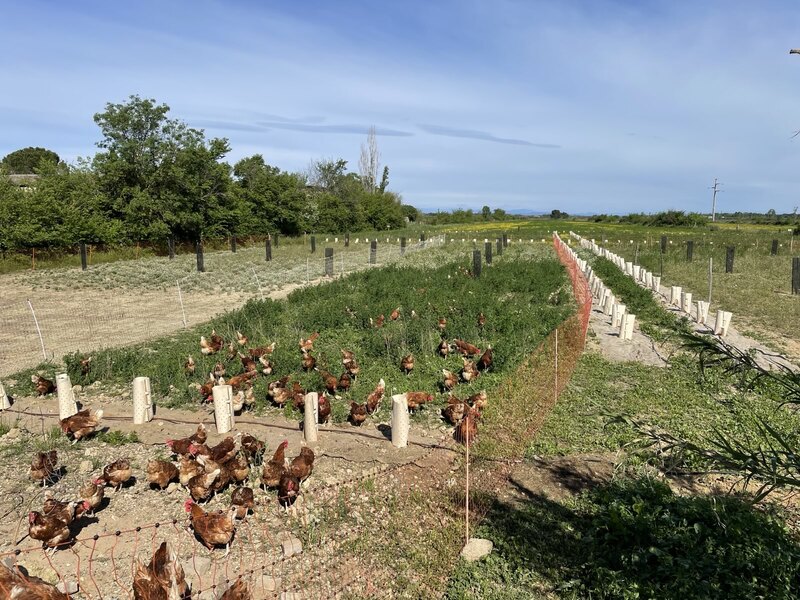
Extensive livestock farming (sheep, goats, free-range pigs or horses) also benefits from these plantations, which improve animal welfare through shade, climate protection and enrichment of grazing land.
Finally, the project supports arable farming and mixed farming systems, where agroforestry contributes to soil structuring, erosion reduction and diversification of agricultural production.
Project type

Agroforestery
Beneficiaries

21 farmers, livestock keepers, winegrowers in the Mediterranean basin
Number of trees
2,745 long lasting trees
Species planted

The project involves planting a wide variety of species such as Morus alba (white mulberry), Sorbus domestica (service tree), Ficus carica (fig tree), Laurus nobilis (bay laurel), Arbutus unedo (strawberry tree), Salvia rosmarinus (rosemary), Lavandula latifolia (broad-leaved lavender), etc. detailled list below.
Partner

Agroof
The Mediterranean Agroforestry Projects initiative includes a wide diversity of local species :
Fruit and timber trees:
- Morus alba (white mulberry)
- Prunus dulcis (almond tree)
- Pyrus communis (common pear tree)
- Prunus domestica (plum tree)
- Ficus carica (fig tree)
- Juglans regia (walnut)
- Sorbus domestica (service tree)
- Fraxinus excelsior / Fraxinus angustifolia (common ash / narrow-leaf ash)
- Quercus pubescens (downy oak)
- Ulmus minor (field elm)
Mediterranean shrub and woodland species:
- Rhamnus alaternus (Italian buckthorn)
- Pistacia lentiscus / Pistacia terebinthus (mastic tree and terebinth)
- Phillyrea angustifolia (narrow-leaf mock privet)
- Laurus nobilis (bay laurel)
- Cistus albidus / Cistus monspeliensis (rockroses)
- Arbutus unedo (strawberry tree)
- Quercus ilex (holm oak)
- Acer monspessulanum (Montpellier maple)
Shrubs with ecological and melliferous value:
- Viburnum tinus (laurustinus)
- Crataegus monogyna (common hawthorn)
- Sambucus nigra (elderberry)
- Cornus sanguinea (common dogwood)
- Rosa canina (dog rose)
- Tilia platyphyllos (large-leaved lime)
- Salvia rosmarinus (rosemary)
- Lavandula latifolia (broad-leaved lavender)
- Thymus vulgaris (common thyme)
These species, sourced from local nurseries or under the Végétal Local label, are selected for their resilience to the Mediterranean climate, role in biodiversity, agronomic value, and capacity to form lasting hedgerows, groves, and agroforestry tree lines.
Works timeline
April – September 2025: design phase
- Carrying out plot assessments with farmers (half a day for each site).
- Identifying objectives, constraints, and opportunities for each farm.
- Soil and vegetation surveys.
- Defining agroforestry layouts (type, length, species, equipment).
- Identifying and raising funding.
- Administrative and legal support for project leaders.
October – December 2025: preparation phase
- Ordering plants and mulching/protection materials.
- Advising farmers on the soil preparation work to be carried out.
- Optional RTK GPS staking to prepare for planting.
January – March 2026: planting phase
- Sorting and distributing plants and materials.
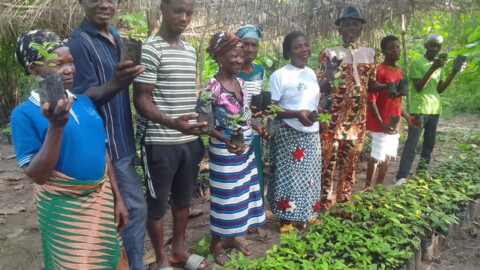
- Group training on planting for beneficiaries.
- Planting trees and shrubs by the project farmers.
From March 2026 to 2029: post-planting follow-up
- Monitoring by project leaders: weeding, watering, pruning.
- Technical visits by local technicians over three years (Y+1 to Y+3) to check on tree establishment.
- Replanting up to 20% of dead trees, if necessary.
Planting partner
It is also involved in the evolution of regulations and digital technologies.
Through this broad range of activities, Agroof is committed to the critical development of agroforestry and to supporting its various actors. The cooperative values the diversity and complementarity of each of its team member’s skills to carry out projects through a participatory approach.
Budget
The total budget to be raised is €55,998, or €20.40 per tree planted and maintained, broken down as follows:
- 90% allocated to the planting project, broken down as follows:
- Engineering and monitoring costs borne by Agroof: €7.09
- Plants, equipment, protective coverings, tree protection fencing (equipment and installation): €9.23
- A Tree For You collection, monitoring and communication costs (10%): €2.04
- and 10% (€2.04) allocated to A Tree for You’s structural costs.
The project is co-financed by the following schemes:
- Occitanie Region – Regional scheme to promote biodiversity, RESTORATION OF THE TREE COVER OUTSIDE FORESTS
- Occitanie Region – Regional scheme to promote agroforestry systems
- 20,000 Pieds sur Terre, local solidarity funding
The beneficiaries are self-financing the soil preparation, planting and maintenance stages, set at €9.94 per tree, for a total cost of €27,279.10.