

De Biesterhof, Netherlands, February 2026
Project objectives and context
The project aims to create a five-hectare food forest – combining sustainable food production, environmental education, and biodiversity restoration – on the De Biesterhof farm in the Netherlands, The goal is to produce fruit, nuts, and plants locally, while boosting social bonds and climate resilience.
The winter of 2025–2026 marks an important milestone for the food forest and productive hedgerow project at De Biesterhof. Although planting activities are currently on hold due to weather conditions — while creating a beautiful landscape, cold temperatures and snow naturally slow things down – the interim results are already looking extremely positive.
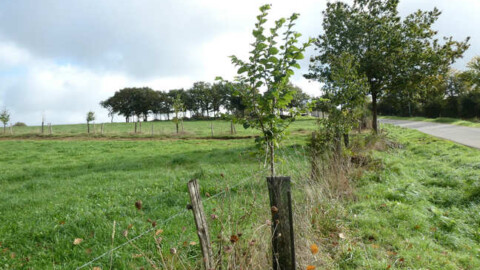
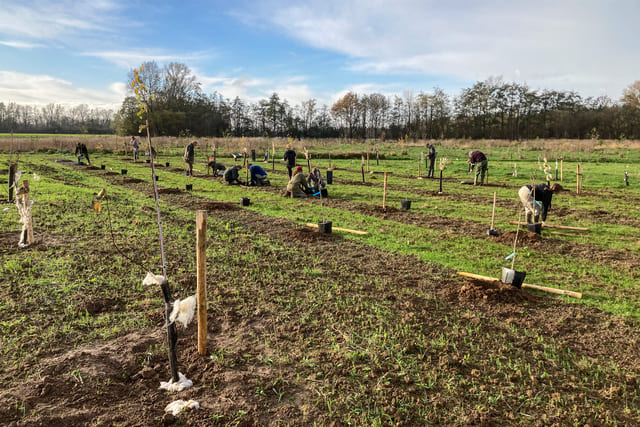
Planting at the end of November 2025 has been a real success. A large proportion of the productive trees and shrubs are already in the ground. This first phase has helped structure a productive and diverse food forest, laying solid foundations for the years to come.
Ambitious targets exceeded
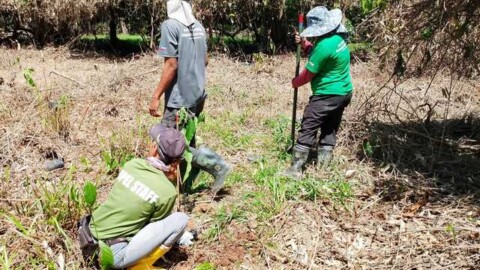
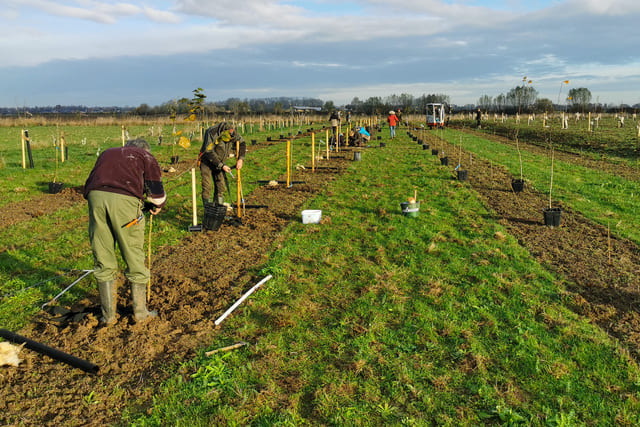
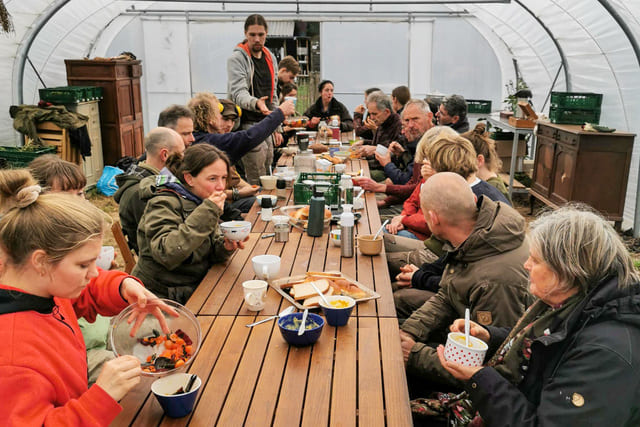
In total, 843 trees and shrubs were planted at the beginning of the winter 2025–2026. A further 325 should be planted by the end of the winter. This planting was were carried out with support from volunteers and farm employees, illustrating the strong collective dynamics behind the project.
The amount of planting has greatly exceeded the initial forecasts for this first winter – due to optimisation of soil preparation work: using bigger machinery over a larger area proved more cost-effective. The grassland areas concerned were ploughed, a clover mix sown, and the soil cultivated again shortly before planting. Thanks to this strategy, many more trees can be planted while keeping costs under control.
Careful and sustainable implementation
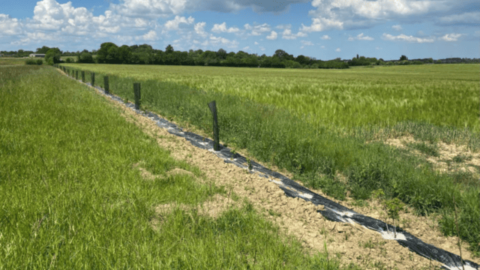
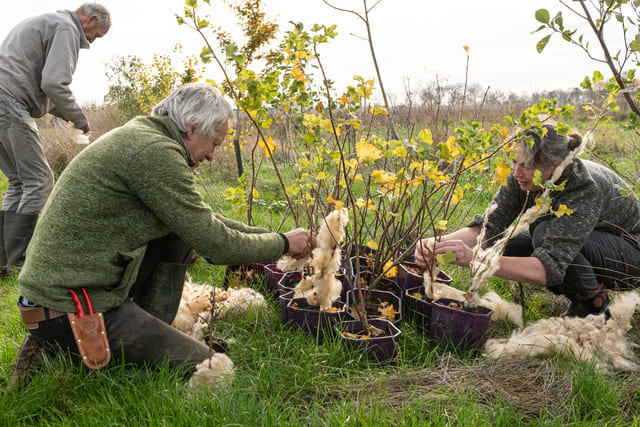
All fruit trees were individually protected against wildlife with sheep’s wool and mulching systematically applied to encourage plant establishment, limit competition from herbaceous vegetation , and retain soil moisture.
Future planting phases over the coming years will include pioneer trees, windbreak hedges, and around 40 additional productive trees and shrubs – all designed to strengthen the overall resilience of the system. At this stage, almost all the budget has been allocated to planting, while complementary facilities — information boards, benches, or a children’s play area — are still pending. yet to be introduced. They will be introduced in 2026–2027 to create an educational space for both adults and children.
Outlook and next steps
At the same time, the farm is continuing to expand its knowledge-sharing activities. Two pruning workshops took place this winter. Despite trying winter conditions and decisions at times taken at short notice, the project is steadily forging ahead.
More updates from the field coming soon!