

De Biesterhof, Netherlands, November 2026
In February, we told you planting had begun at the De Biesterhof farm in the Netherlands. Eight months later, here is what has happened: the trees have come through an extremelydry summer, counting on a dedicated team and group of young French scouts who came to lend a hand.
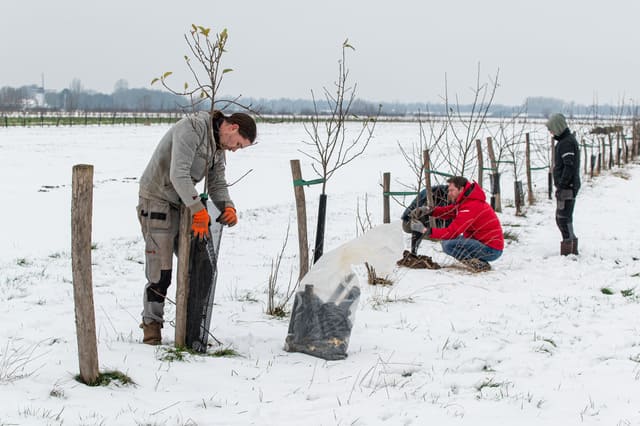
Winter 2025–2026: over 1,200 trees and shrubs planted
The project aims to plant 1,670 perennial trees over three planting seasons. The winter 2025–2026 planting campaign went above and beyond its stated targets: a total of 1,205 trees and shrubs were planted, including 325 pioneer trees and 880 productive trees and fruit bushes.
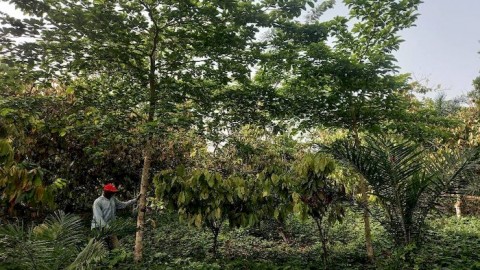
Most of the pioneer trees are fast-growing black locusts (Robinia pseudoacacia ‘Rectissima’). They regenerate the soil and rapidly create a forest microclimate, providing shelter for other species to thrive.
The productive species are extremely varied:
- around 60 apricot trees;
- 81 hazel trees;
- 35 fig trees;
- 25 mulberry trees;
- plum, mirabelle, pluot, apple, and pear trees;
- soft fruit: currants, jostaberries, goji berries, aronia, raspberries…
- a few curiosities like the Sichuan pepper and Toona sinensis.
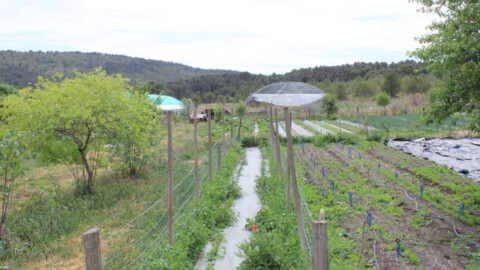
The trees are planted in rows, with the berry bushes between the taller trees.
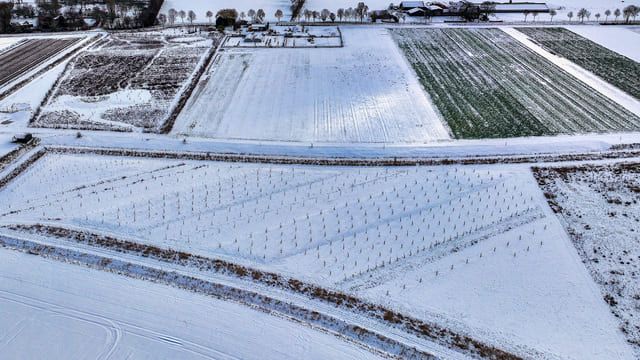
The remaining trees will be planted this coming winter 2026–2027.
A drought that put the team to the test
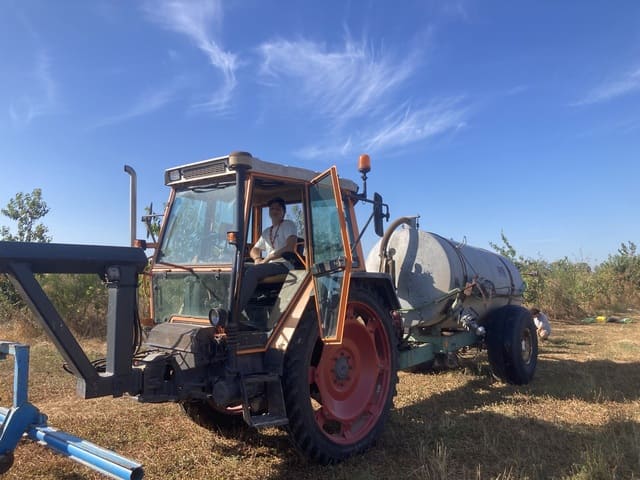
The summer of 2026 was exceptionally dry and the clay soil on the farm didn’t help matters. When moist, clay holds water well. Once it dries out, however, it soaks everything up. “You water a tree with 30 litres and the next day it’s completely dry again, because the clay around it absorbs the water too,” explains the farm team. Each tree was watered by hand around six times over this summer.
One decision made all the difference: installing drip irrigation in the self-harvest area. Since the rows here are too narrow for the tractor and water tank, this drip system saved many plants.
Despite these efforts, the drought left its mark. The trees have shown little visible growth this year, since their energy has been channelled into simply surviving. The mortality rate is around 20%. The drought also led to a surge in mice, which like to burrow beneath young trees, where watering leaves the soil softer. Weakened trees are being monitored and replanting is planned to achieve the project goals.
The summer also reminded the team just why the project matters so much. In time, this diverse forest with its living soil will provide food and shelter for people and animals alike, even during the severe droughts that are likely to become more frequent.
French scouts to the rescue!
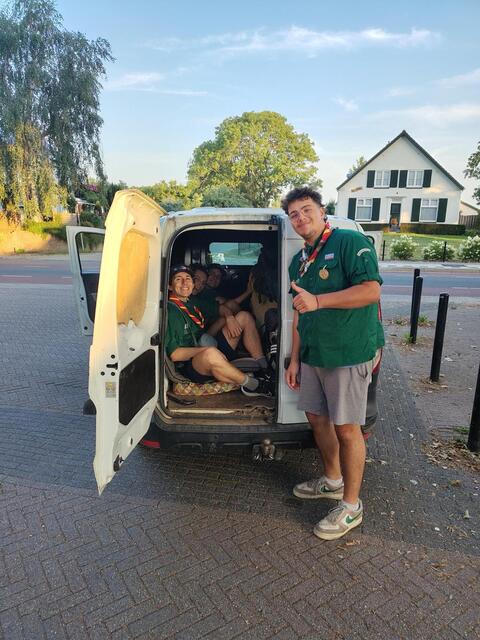
The summer also brought about a wonderful encounter: a group of French scouts, all more or less in their twenties, came to help for several weeks. “They literally saved many trees. On our own, we would never have kept up with the work for so many weeks,” says the farm team.
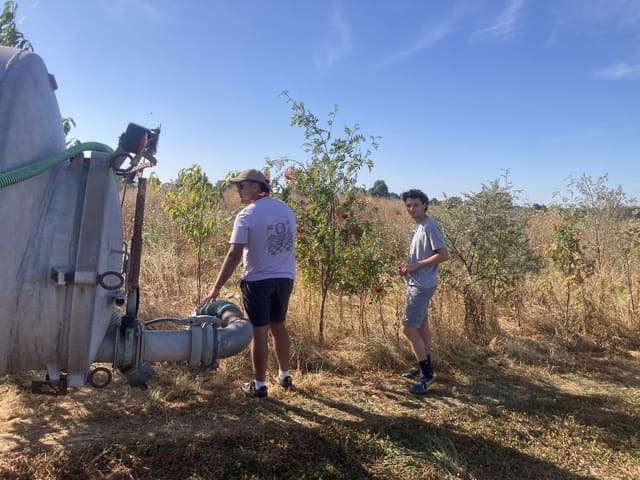
The scouts camped in the heart of the food forest, mostly sleeping in hammocks. Since the outdoor kitchen at the farm was finished just before their arrival, they were able to cook outside every evening. Between watering sessions they made the most of the bikes and rowing boat lent by the farm, as well as swimming in the crystal-clear water of a nearby lake. They left delighted to have been of help and having learnt a great deal about regenerative agriculture.
Early encouraging signs
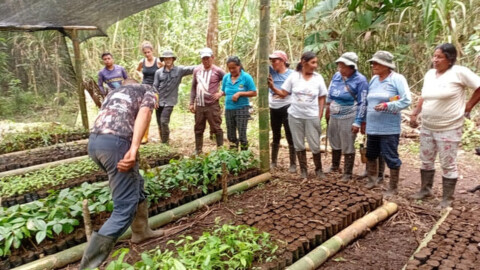
Amid these difficulties, there is good news. Land van Ons, A Tree for You’s technical partner for this project, has a biodiversity team monitoring the farm. This team has recorded new peaks in wildlife and insect activity, especially in the food forests. In the spring of 2026, two days of pruning training also led to a group of volunteers dedicated to looking after the trees.
What’s next?
Autumn and winter 2026 will be devoted to several tasks:
- replacing any trees lost;
- final planting of trees planned for the project;
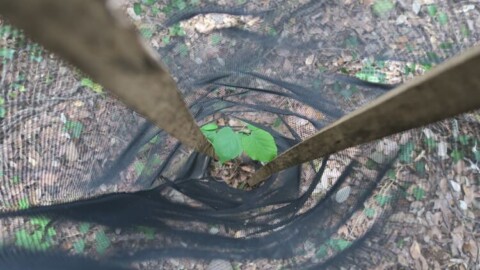
- installing stakes and tree guards;
- maintenance: weeding, mowing after the bird-nesting season, and pruning.
Educational features were also planned as part of the project and introduced in 2026: information panels, benches, and a water play area for children. In a few years’ time, the first fruit and nuts will be harvested and sold locally.
Thank you for supporting this project. It is still seeking funding, so, if you would like to keep on providing support, please don’t hesitate to donate!