

Tena, Ecuador, November 2026
A year after launching the new phase of the participatory reforestation project in Tena, the programme is moving forward on two fronts. Eight new communities have joined the adventure and their nurseries are overflowing with young seedlings. At the same time, the first monitoring visits are starting for trees planted in 2025.
Last summer, we told you about the fresh momentum for participatory reforestation in the Ecuadorian Amazon: 10 communities, 13 nurseries, and more than 46,000 seedlings prepared with our local partner Ishpingo. Read on to find out what happened on the ground between January and June 2026…
Eight new communities, eight nurseries
In 2026, the project has been expanding into two new sectors. In Pano, west of Tena, five communities are taking part: Taza Urku, Pumayaku, Alto Pano, Copal Pamba, and El Calvario. Located in the buffer zone of the Colonso-Chalupas Biological Reserve, they want to protect their land by planting timber trees and diversifying their income with fruit trees.
In the Archidona sector, to the north, three communities have joined the project: Batan Cocha, El Retén, and Santa Rita. Known for its community tourism on the ‘cocoa route’, Santa Rita itself approached Ishpingo to strengthen agroforestry on its farms.
In these communities, the land has been largely cleared of forest. Families live mainly from selling cassava, bananas, cocoa, and maize, often through third parties. Agroforestry opens up new sources of income for them, as well as a more varied diet.
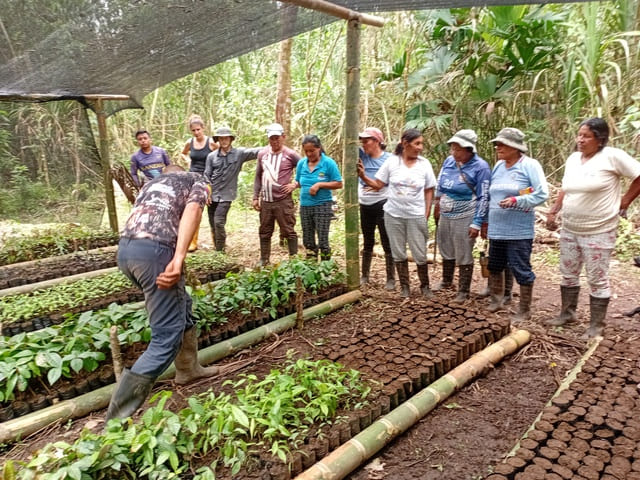
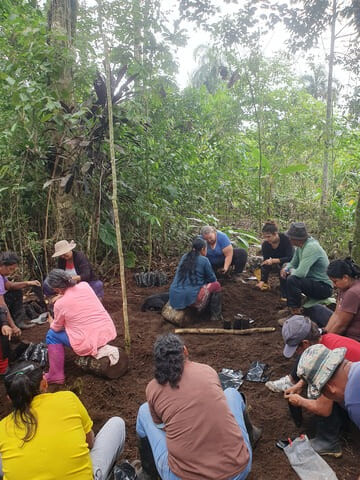
As every year, everything was done during mingas communal workdays. In February and March, participants built one nursery per community from local materials (palm and bamboo). Up until June, they prepared the substrate with bokashi organic fertiliser, filled the bags, and learnt to transplant young seedlings and recognise the different species. All the participants also visited Ishpingo’s experimental farm to discover productive agroforestry models and imagine the future of their own farms.
42,728 trees ready to be planted
Thanks to good seed harvests, the result exceeds expectations:
- 20,955 timber trees from 15 threatened species that have almost disappeared from the region
- 21,773 fruit trees from 23 native or well-adapted, non-invasive species
- 3 medicinal species used in traditional medicine:
- sangre de drago (Croton lechleri), whose sap helps heal wounds
- lustunda (Couroupita guianensis), used for respiratory complaints
- chuchuwaso (Monteverdia laevis)
These seedlings will be shared out equally among 165 families. A little anecdote: jackfruit is back on the list because, after tasting it during the farm visit, all the project participants were keen to plant some!
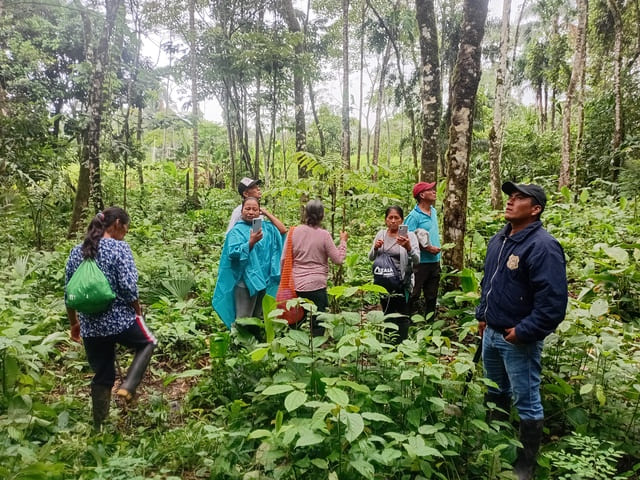
Monitoring and caring for the trees planted in 2025
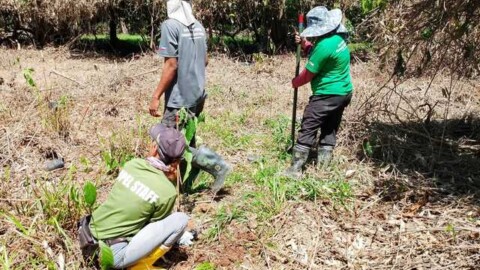
Planting is only the beginning. For two years, the technical team visits every family to check on their trees and train them in caring for them. These visits began in June in the Capirona community , in the Misahualli sector, where all 25 plots were visited.
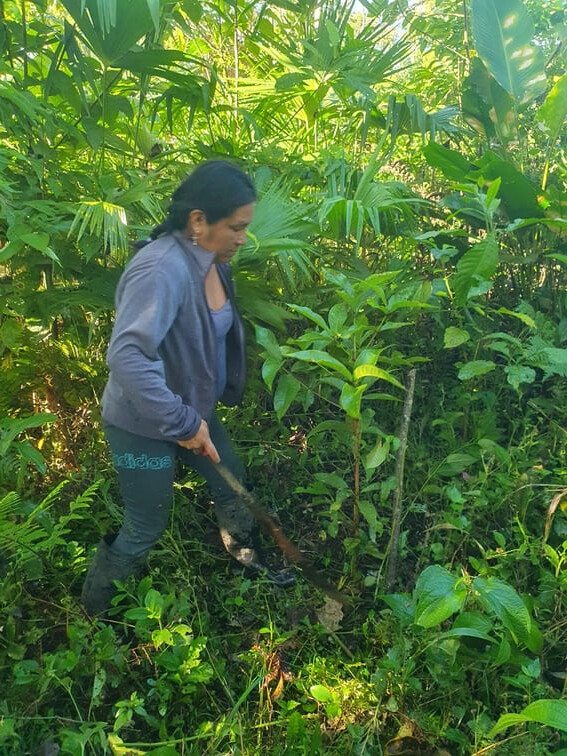
During each visit, the technicians assess the overall condition of the plot, the survival rate, and tree growth. They also train farmers in ‘ring weeding’ (clearing weeds around the base of each seedling) and managing shade. Both are vital for ensuring young trees survive.
The first results have proved extremely encouraging: growth is good and mortality low on the vast majority of plots. A few families are struggling to maintain their land, including one participant who lives alone. The team will help them get their plots back into shape.
Capirona turns to cocoa
Capirona has been hit hard by illegal mining and is looking for sustainable economic alternatives. Its members asked Ishpingo and A Tree for You to support them in producing grafted cocoa seedlings.
The three groups organised their own mingas to restore the nursery used to grow the 2025 seedlings and sow seeds brought from their farms. Ishpingo provides the bags and meals, and keeps track of progress. Nearly 12,000 cocoa seedlings have already been bagged up. Some will be grafted in the coming months by trained community members, so as to make the community self-sufficient.
An increasingly unpredictable climate
Fieldwork always brings its share of surprises. Once again, the rainy season this year never really set in. Days of intense sunshine alternated with violent storms. At the end of June, the rains still hadn’t come. Crickets devoured the young guava seedlings and not a single mango tree in the area bore fruit, which left the nurseries without seeds. These losses were replaced by other species and have not impacted the project goals.
What’s next?
During the second half of 2026, the seedlings from the new nurseries will be shared out fairly. Each family will plant them using the agroforestry model that suits them best. The overall planting target is 37,500 trees. Monitoring the trees planted in 2025 will continue in the other communities from July onwards. At the end of the year, a second visit will provide fertiliser and pruning training, with secateurs supplied by the project. The goal remains the same: a survival rate of at least 80%.
Thank you for your support
Behind each and every one of these trees are Amazonian families taking back control of their land and yourselves too! Thanks to your support, deforested hillsides are gradually regaining their precious tree species, orchards are taking shape, and communities are finding economic alternatives to mining. Thank you for helping us grow this shared forest!
Look out for our next update in a few months, when we’ll share news on this year’s second planting phase. In 2027, a final planting phase is planned for new communities supported by the project.